

- 160 Views
- 9 Min Read
- (0) Comment
South India Pilgrimage Tours: Explore Temples Beyond Meenakshi
When the majority of visitors consider temples in South India, what comes to their mind is the big gopurams of the Meenakshi Amman Temple in Madurai. It is unquestionably popular, and its magnificence can easily explain its inclusion in the list of the most judged sacred places in India. However, this popularity tends to dim the radiation of a galaxy of other temples dotted all around Tamil Nadu, Karnataka, Andhra Pradesh, and Kerala. Such temples are not usually in the standard tour guide, but you can find tales cut in stone, practices that have all been going on, and an ambiance that seems to have been frozen in time.
By deciding to visit these smaller graves, tourists can get out of the crowd and into areas where there is still peace of mind. They need not be closed to deep experiences of those who seek peace, art lovers, and spiritual enthusiasts. Through the South India pilgrimage tours, these treasures can be experienced in a well-planned itinerary, and this gives the customer a more living connection with the heritage of the region.
Sri Ranganathaswamy Temple, Srirangam
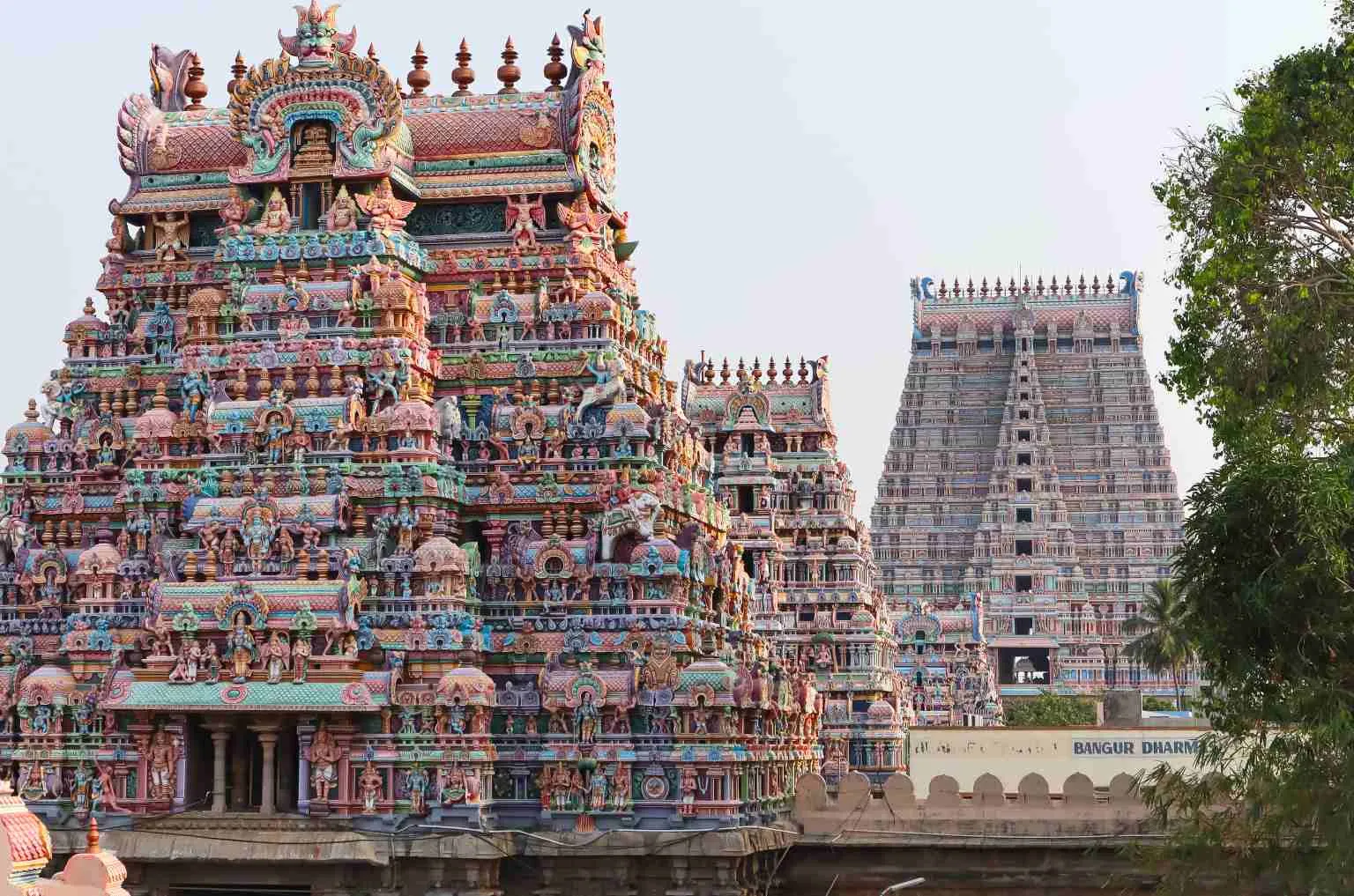
Srirangam is not just a temple; it is an urban village. The Sri Ranganathaswamy Temple is situated on an island created by the Cauvery River and is considered to be the chief among the 108 Divya Desams, or shrines of Lord Vishnu. Visitors to Srirangam regard visiting those places as equivalent to entering Vaikuntha, the celestial abode of Vishnu.
It is characterized by the extraordinary size of the temple, consisting of seven concentric prakarams (enclosures) with shrines, markets, and households all turning around the sanctum. Thousands flock here during Vaikunta Ekadasi, but on weekdays, it is so spacious that you can always find space to reflect. Myths about Vishnu are found in the carvings and inscriptions in its glory, tracing the dynasties of the Cholas, Pandyas, and Vijayanagara, who were involved.
One of the pilgrimages here is not only a worship service but also a journey in time through history, spirituality, and life in the community. It is not surprising that it is one of the pillars of South India pilgrimage tours, which offers both luxury and personality.
Annamalaiyar Temple, Thiruvannamalai
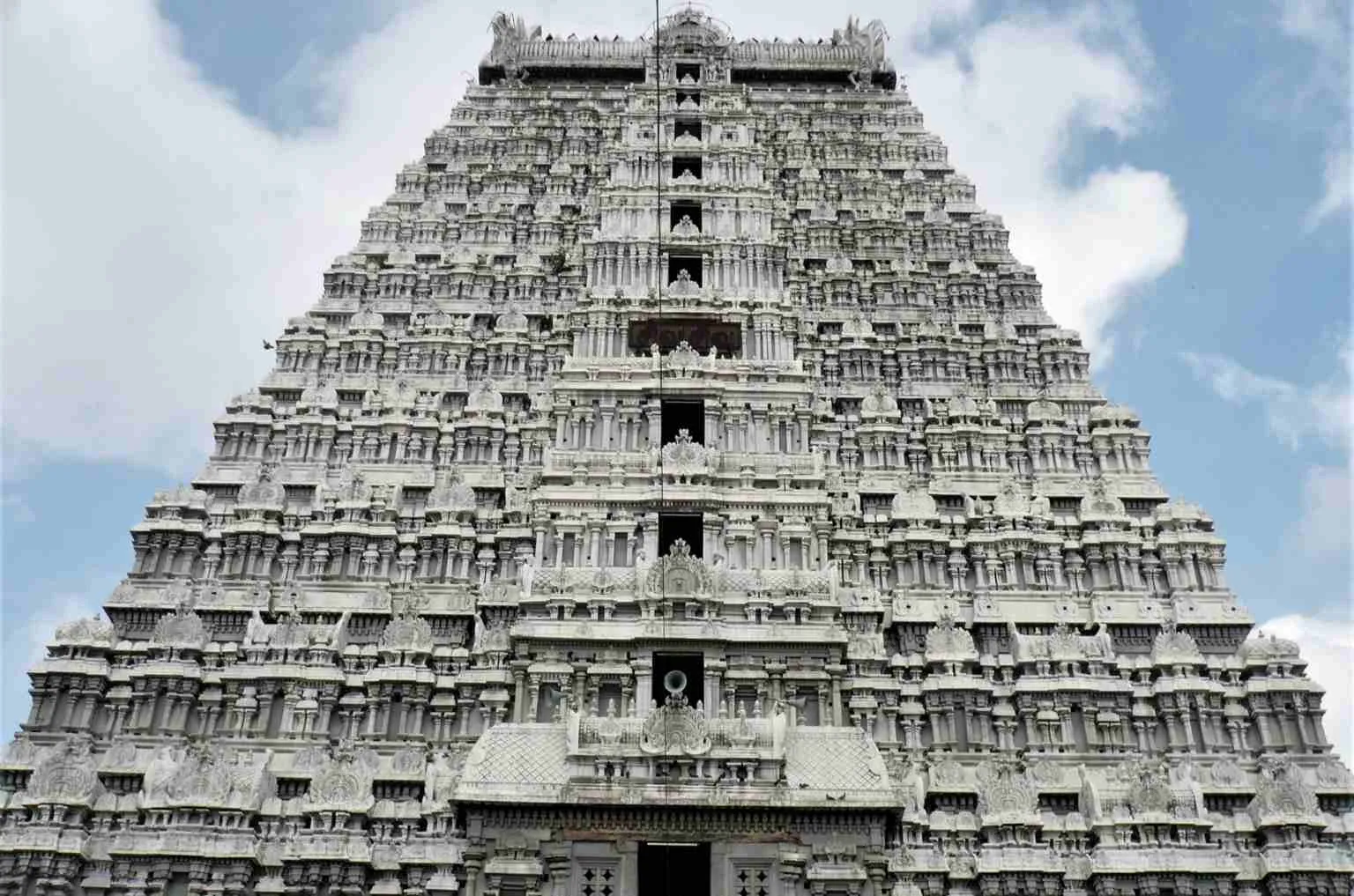
Annamalaiyar Temple is so closely set with nature that few other temples are linked to it. The temple is situated at the foot of the hill known as Annamalai, and it honors Lord Shiva as Agni (fire), which emanates limitless energy. The temple complex is massive, and four grand gopurams take the position of the skyline in this town.
The difference is the Girivalam practice of a holy periambulation of the hill, which covers 14 kilometers. People present in different parts of the world visit this path as pilgrims; they walk it bare, particularly on full moon nights, when they repeat prayers and feel the spiritual magnetism of the hill. The temple, per se, is an architectural masterpiece of the Dravidian one, having intricately carved mandapams and extensive differences in the different forms of courtyards.
In Karthigai Deepam, a huge pot of ghee is illuminated at the top of the hill and is equated with Shiva being the everlasting fire. This is one of the most effective spiritual experiences in South India, by witnessing this spectacle. However, during non-festival periods, the temple is rather trance-like, which suits those who need to avoid the traveler hustle and bustle and immerse themselves in worship.
Brihadeeswarar Temple, Thanjavur
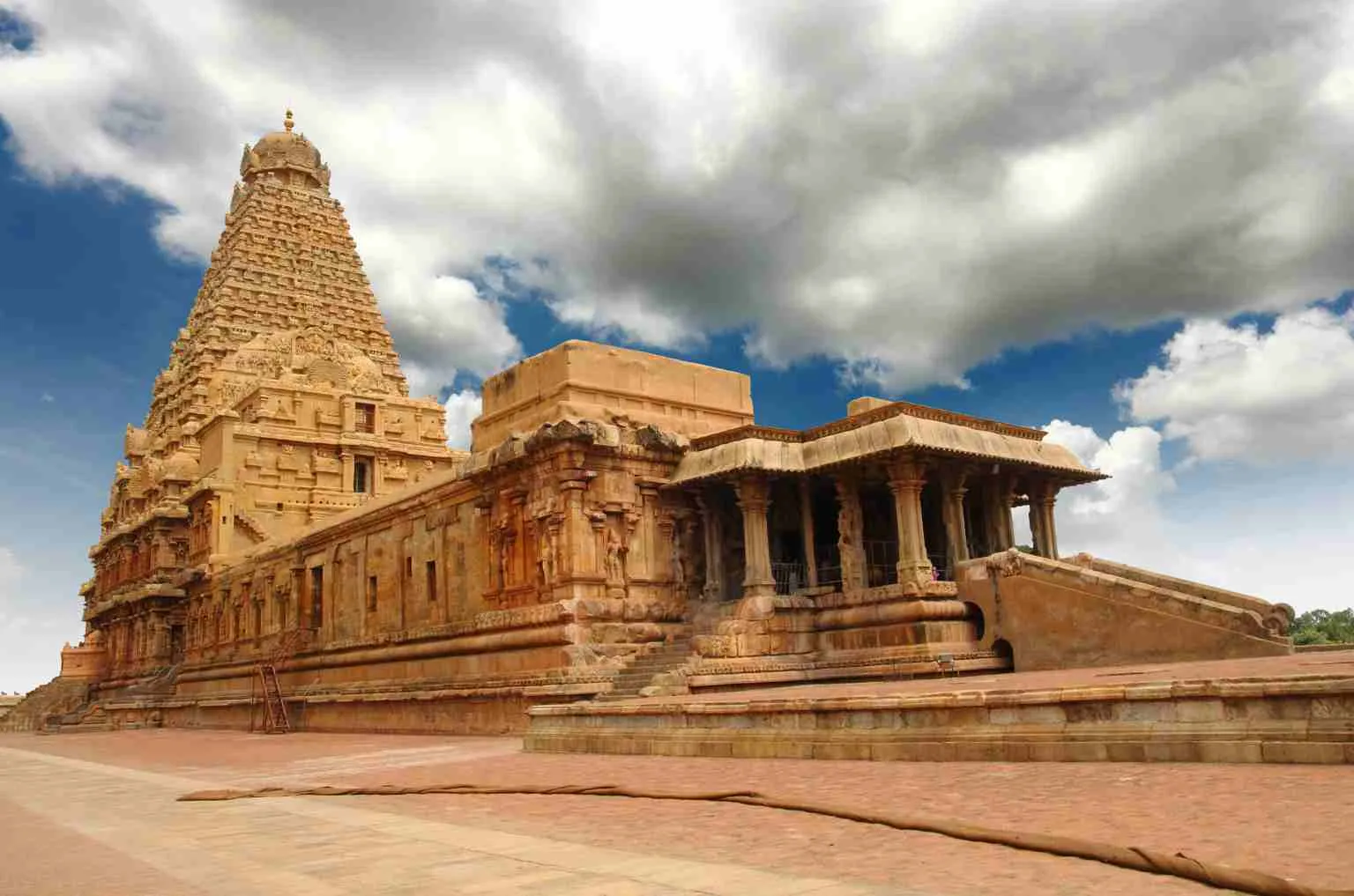
The Brihadeeswarar in Thanjavur, commonly referred to as the Big Temple, is still a living legacy of the Chola Empire. Raja Raja Chola I thought of this not only as a place of worship but also as an expression of authority, devotion, and artistic quality. It was constructed in the 11th century and is even higher, with its vimana lifting high up to the sky.
The size of the engineering astonishes contemporary specialists. How did constructors put an 80-ton granite capstone on top of the tower without machinery? It is said that enormous ramps several kilometers in length were made with the purpose in mind. The sanctum contains a large Shiva linga, and there are frescoes and sculptures that are in praise of gods, kings, and dancers.
Going to Brihadeeswarar is like entering an open-air museum of South Indian history. This is not as busy as Madurai, and you will frequently encounter expansive courtyards with enclaves of silence where the singing is going on. This is not merely a temple for cultural travelers but a marvel of architecture that represents the genius of medieval India.
Virupaksha Temple, Hampi
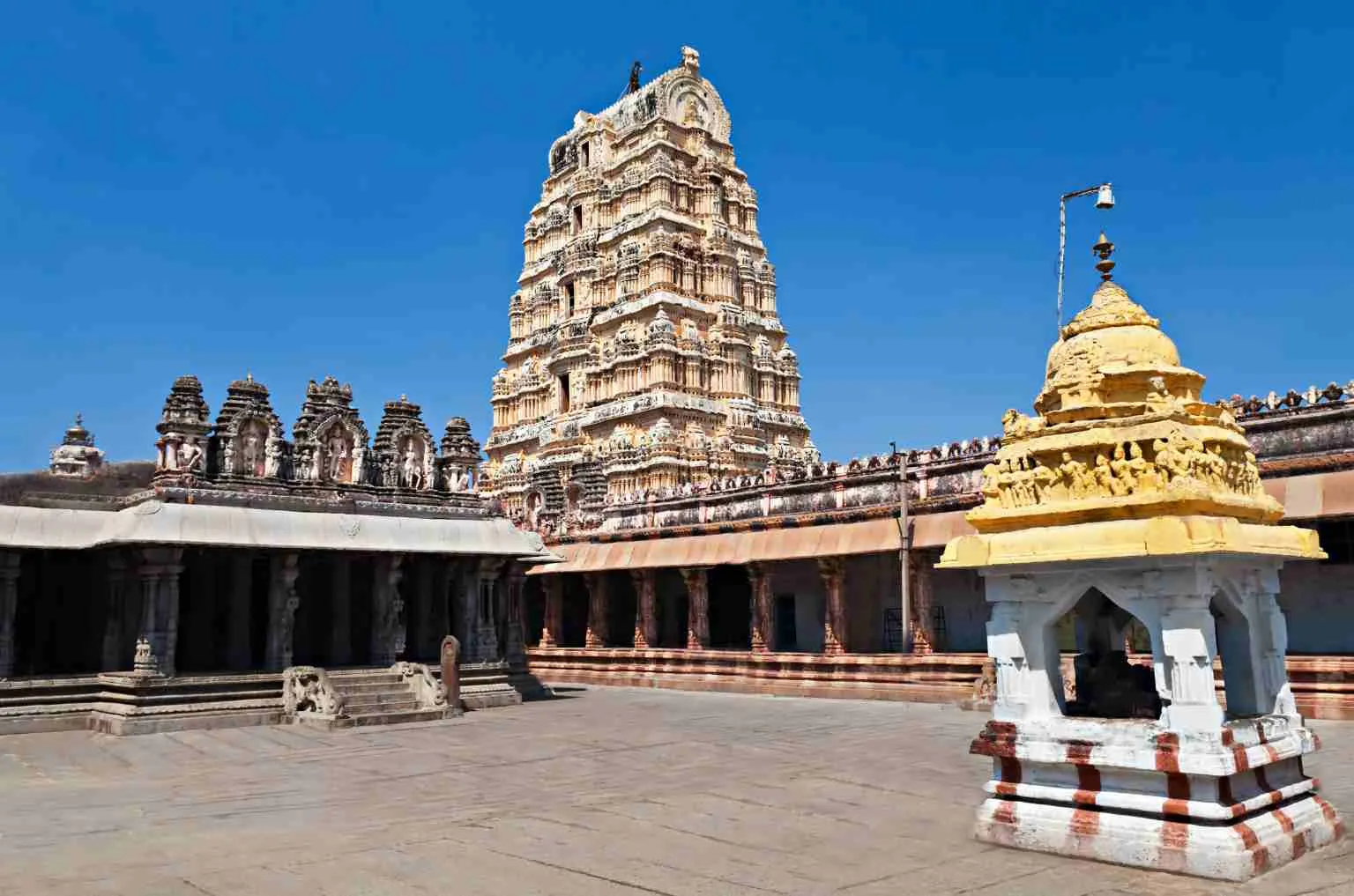
Hampi is a UNESCO World Heritage Site that is popular due to its ruins, though Virupaksha Temple is still a pulsing heart among the ruins of the Vijayanagara Empire. It was devoted to Lord Shiva and has endured invasions, time, and natural erosion, and has continued with uninterrupted temples for over a thousand years.
It has a compound gopuram, as it is used to introduce people to the surreal world of boulders, rivers, and ruins. The interior of the temple is covered with mythological stories and life from the time of Vijayanagara in the form of murals. One of the most interesting characteristics is the pinhole camera effect, where the sun rays through a small hole cast an inverted image of the gopuram onto the wall inside the sanctum, an ancient science/religion game.
Whereas historians are attracted by the ruins of Hampi, Virupaksha is attractive to seekers who wish to be spiritually engaged in some of the most distinctive scenery in India. Seeing priests carry on evening services when monkeys are all over the stone pillars is something you will perpetually enjoy even after your travels.
Chennakesava Temple, Belur
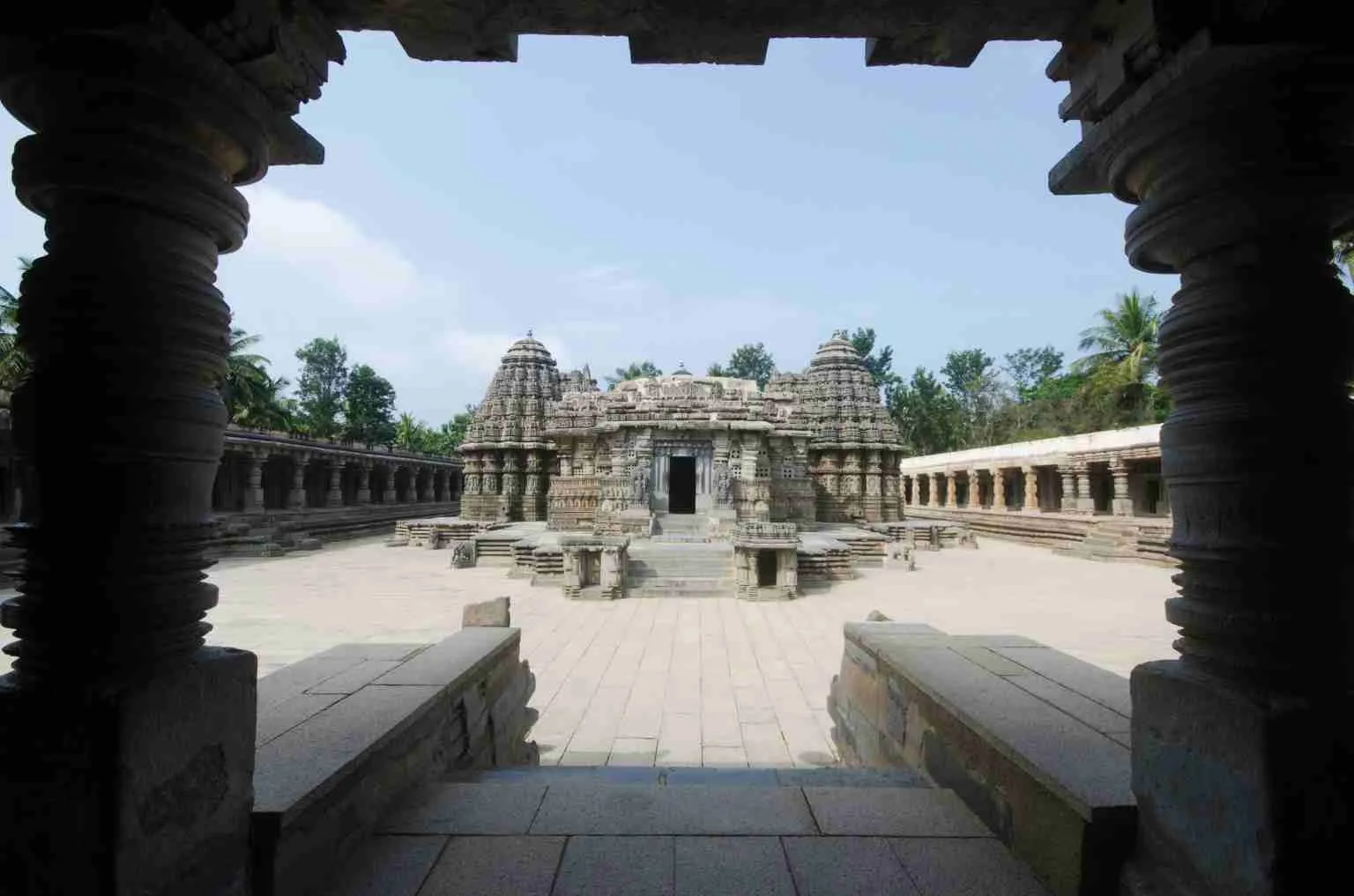
While Hampi is majestic, Belur is stone poetry. The Chennakesava Temple was also commissioned in 1117 AD by King Vishnuvardhana as a result of his battle triumph. Vested to Vishnu, it is a fine characteristic of the Hoysala style, and the soapstone carvings are so elaborate that it is like lacework.
All surfaces of this place are covered: there are sculptures of heavenly maidens and monstrous creatures, dancers, and gods on the walls. The artistry is so finely perfected that jewelry, hairstyles, and clothing carved out of stone look realistic. The temple is also an indication of a fusion of influences, as some of the carvings depict Jainism themes and even secular life.
Belur means to wander slowly, as opposed to bigger temple complexes. Trying to track the artisanship, you can spend hours on your fingernails and wonder at the accuracy of the professional work of the artisans who labored for decades. This is the reason Chennakesava is a favorite destination for those who would like to dine in the cultural nature of South India rather than the spiritual mystical touch.
Lepakshi Temple, Andhra Pradesh
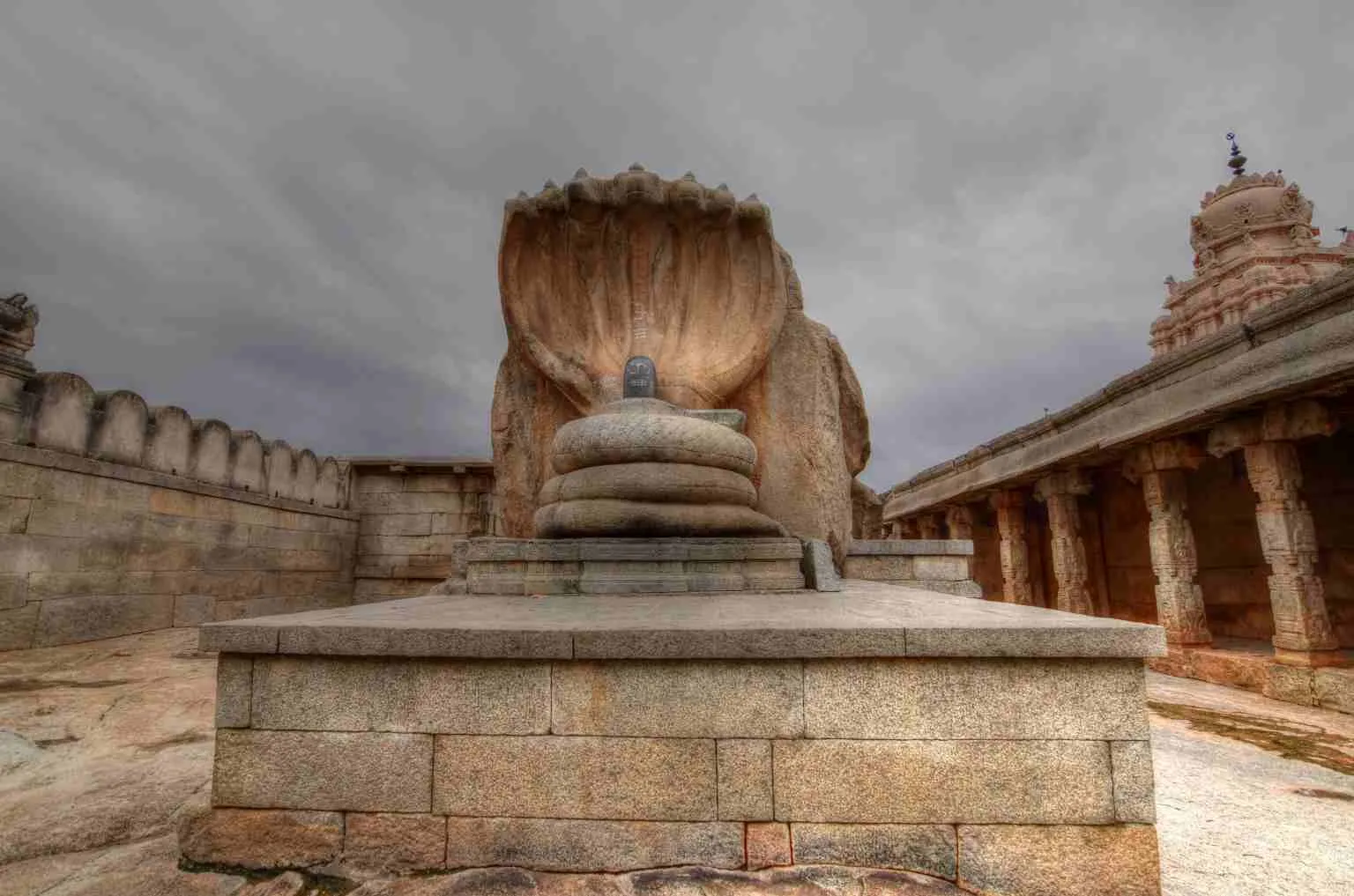
It is not merely about worship in the Lepakshi Temple, but wonder. Constructed under the Vijayanagara kings in the 16th century, it is devoted to Veerabhadra’s fierce incarnation of Shiva. The temple is known because of its hanging pillar, a column that is not in contact with the floor completely. To experience this, many visitors attempt to slide cloth or paper beneath it.
There is also one of the largest mural paintings in India in the temple, an enormous fresco of the Hindu trinity and other gods that stretches over the ceilings. The outer beginnings of its courtyard contain a huge monolithic Nandi, as grand as it is peaceful.
The name itself (Lepakshi) has something to do with the legend of Jatayu of the Ramayana, who is supposed to have fallen there when hit by Ravana. It is a perfect balance of myth, art, and worship, and is a place that anyone hungry for mystery and splendor should be.
Suchindram Thanumalayan Temple, Kanyakumari
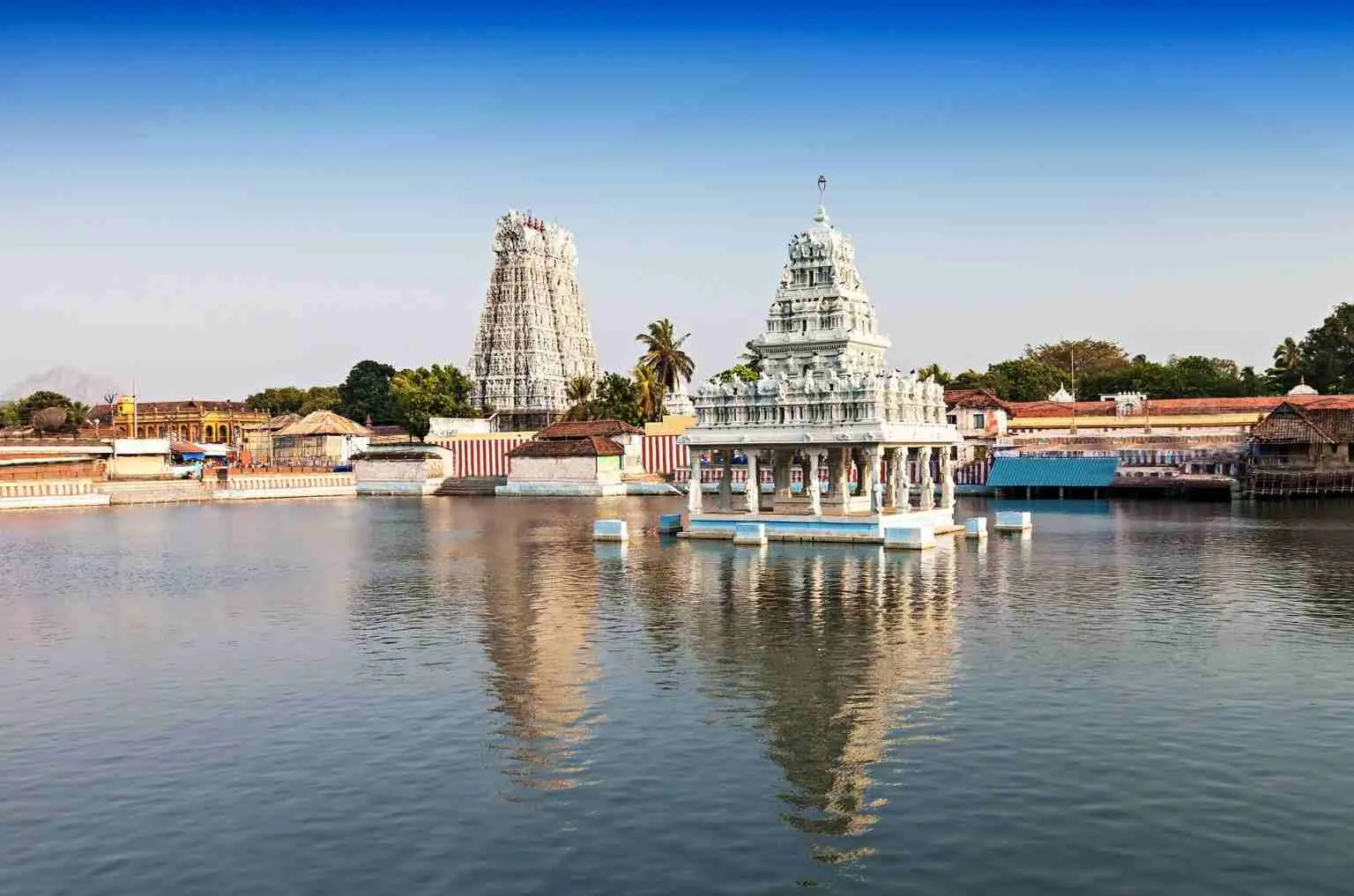
Suchindram Thanumilayan Temple is a spectacular shrine that honors Brahma, Vishnu, and Shiva in one place, an unusual occurrence in Hindu culture. Its sacredness appeals to worshippers who wish to get the blessings of the Trimurti at a single location.
The temple also contains something to gawk at, such as the towering 22-foot statue of Hanuman, which is awe-inspiring in its presence and size. Another marvel is the musical pillars in the Alankara Mandapam, which play different notes on being struck. The skyline of the town is dominated by the gopuram that towers and has hundreds of sculptures whitewashed.
Suchindram has fewer tourists as compared to the other southern temples, which adds an air of serenity to the temple. These rituals are quite distinct but intimate, and thus a very personal experience for the pilgrims. To the people who go a bit further to see the end point of India, this temple is an appropriate end to a spiritual exploration.
Why These Temples Matter Beyond Meenakshi
Meenakshi Amman can be the jewel in the crown, yet the temples mentioned here are the symbols of the scope and peculiarities of the spiritual and artistic culture of South India. They are a display of architectural variety, ranging from Chola pomp to Hoysala delicacy, Vijayanagara murals to Dravidian towers. More to the point, they allow spending time in silence, without the excess number of tourists.
By visiting these temples, you get to follow the less-traveled paths, and you get to experience history not as a museum but as an evolutionary tradition. They are typical of the reason why the South India pilgrimage tours do not only mean visiting the temples but also knowing the civilization that still lives through these sacred places.
Journey With India Wonderland
Having a spiritual companion who is also an expert will help explore the spiritual heartlands of South India better. India Wonderland figures out tailor-made tours to showcase both the gems and the landmarks. They make sure that your pilgrimage will be enriching and not exhausting through smooth travelling arrangements, master-trained guides, and well-laid itineraries.
Be it the sacred hill walk at Thiruvannamalai, the brilliance of Chola in Thanjavur, or the mysticism of Lepakshi, India Wonderland will make you gaze and touch, and feel the temples of South India in their ultimate splendor. Having them will turn each of your journeys into a tale to be told.
Final Thoughts
South India is a place where temples are not monuments; rather, they are breathing representations of worship, art, and cultural perseverance. Meenakshi Amman shines in the world, but thousands of others silently stand their ground, waiting for their travelers who would just go deeper.
Each of these temples is an introduction to worlds where the divine and the human interact in stone, ritual, and belief, and which are found in the jutting corridors of Srirangam, in the tranquil, poetic carvings of Belur, in the mystic fires of Thiruvannamalai, and in the trinity of Suchindram in stone, ritual, and belief that rarely occur today.
Hop on these trips with India Wonderland, and you will find that the real magic of South India is not a single celebrated temple, but it is in a tremendous number of consecrated places where history, belief, and beauty are combined.